 Join our Latest Webinar today - Why Imaging Centers Need 3 Revenue Engines - Not Just One →
10 User Experience (UX) Principles for Imaging Websites
When was the last time you booked an appointment through your own imaging center’s website?
Was it easy to use? Did it guide you to the right scan type, location, or insurance information without confusion? Did it feel like a patient-centered experience?
If not, you’re not alone. Most imaging websites look professional, yet fail to convert visitors into patients.
That’s a UI/UX problem, not a marketing one.
What UI/UX Means for Imaging Centers
In radiology, User Experience (UX) is where care truly begins, long before the scan itself. It’s how patients feel seen, informed, and confident enough to take the next step, whether they click “Book Now,” call your center, or fill out a quick contact form.
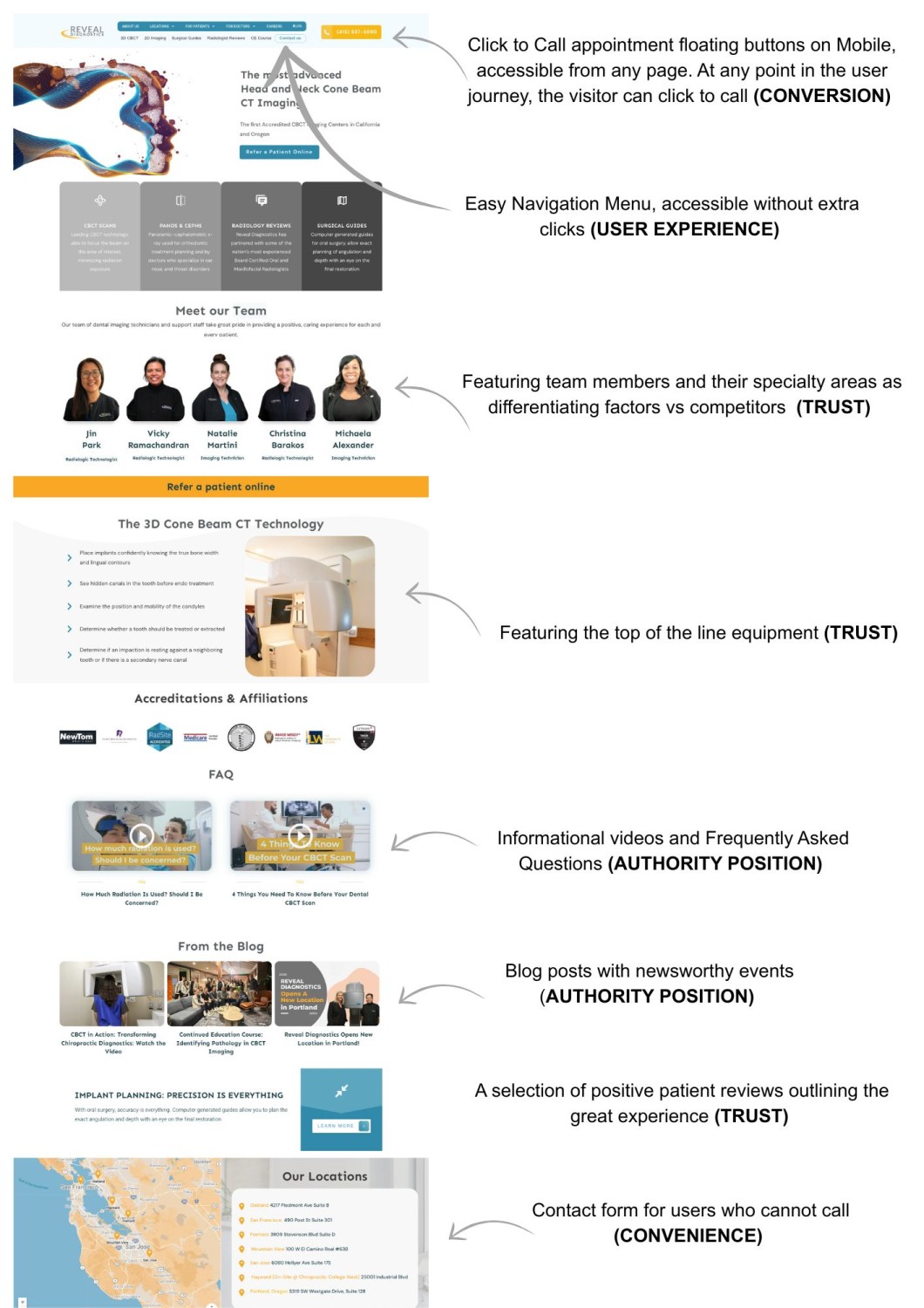
Every element plays a role in that decision: seeing real team members builds connection, clear navigation reduces hesitation, showcasing top-of-the-line equipment builds trust, and patient reviews validate their choice. Informational videos answer silent concerns about safety, radiation, or prep, while floating call buttons and accessible forms make it easy to act in the moment of intent.
When all of these touchpoints align, the website stops being a brochure and becomes a digital reflection of care, one that feels human, trustworthy, and ready when the patient is.
- UX (User Experience) determines how patients navigate your site, how intuitive each step feels, and whether the journey builds trust.
- UI (User Interface) shapes what they see: your visuals, buttons, color contrast, readability, and mobile responsiveness.
When both work together, patients move seamlessly from interest to booking. When they don’t, your marketing ROI decreases.
10 UI/UX Principles That Drive Patient Volume
Here are the principles we implement in RMS websites and patient access systems:
- Responsive Design Your site must look and function flawlessly on every device. With more than 70% of imaging searches happening on mobile, responsiveness isn’t optional, it’s the foundation of access.
- Google Core Web Vitals (Speed & Stability) If your website takes more than three seconds to load, patients leave. Google now ranks healthcare sites by performance: speed, visual stability, and mobile friendliness directly influence both search visibility and conversion rate.
- Minimalism for Conversion Fewer clicks. Fewer distractions. A streamlined layout that focuses attention on key actions like “Book Now” or “Refer a Patient Online” shortens the distance from interest to appointment.
- User-Centric Flow Design every interaction around how patients think, not how your operations are structured. From scan information to insurance details, make their decision-making effortless.
- Trust Elements Featuring your technologists, radiologists, and equipment builds emotional safety. Add visible accreditations, patient reviews, and recognizable technology brands; these are silent credibility multipliers.
- Authority Content Informational videos, FAQs, and blog updates demonstrate expertise. Patients trust centers that educate them, not just market to them.
- Clear Hierarchy Guide the eye and the click. Prioritize what matters most: scan types → insurance accepted → self-scheduling → contact options. Every scroll should lead toward clarity, not confusion.
- Accessibility & Compliance ADA, HIPAA, and security compliance are more than checkboxes, they signal professionalism and patient safety. Ensure all forms, videos, and links meet accessibility standards.
- Convenience Features Click-to-call buttons, embedded contact forms, and easy navigation menus reduce friction and recover patients who might otherwise leave. Always provide multiple ways to connect instantly.
- Usability Testing & Continuous Optimization True UX performance is measured in booked appointments, not design awards. Track behavior, run A/B tests, and continuously refine based on data from real patient interactions.
A well-built UI/UX doesn’t just look good. It builds trust, improves conversion, and reflects the clarity your clinical team delivers every day.
If your imaging website or patient access system hasn’t been redesigned with UI/UX and RMS automation in mind, it’s time to look closer.
More patients. More referrals. Fewer no-shows.